 by Wynnie Lamour-Quansah
You all already know that I’m solidly in the bilingual trenches with Baby B. She is comfortably saying full phrases in Kreyòl (“Sa se pou [Baby B], sa se pou Mommy”); she self-corrects when switching from English to Kreyòl (“She’s la” pauses to reflect and says instead “… li la”); and she completes what’s missing (when counting to ten, if I stop at 9, she’ll say “where’s dis?”). But we don’t chat enough about what’s happening in my mind and I have to say, it’s a lot!
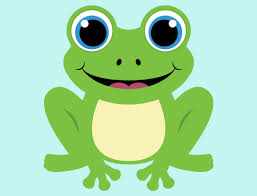
A few days ago, Baby B and I were outside and we stumbled across a frog that was just chillin’ in our pathway. It was the cutest little frog I had ever seen and we were both immediately enamored. As we watched it, I knew that this would be the perfect teaching moment for Baby B. When introducing babies to languages, context is truly everything. We saw a real lakansyèl (a rainbow) a few weeks ago and Baby B can’t stop saying that word! So, I said in a loud and very animated voice, “Gade Baby B, sa se yon…kabrit!”
My brain immediately said to me “NOPE – that’s not it.” But I was initially convinced – I mean, I knew the word for “frog” started with a “K” and has an “R” in it…it must be “kabrit”. I blinked slowly as I processed all the Kreyòl words in my mind and ultimately landed on the correct word: KRAPO. Of course I know the word for “frog” in Haitian Creole. I mean, I even wrote a story in Kreyòl about a frog! (check out the Jaden Timoun Storybook here: https://jadentimoun.com/storybook) But, when your target language for your baby is also a heritage, but not quite native, language – there will be moments where you call a frog a goat. And those moments happen more often when you’re tired, stressed out, emotional, and all that happens to humans that impact their mental capacity.
I quickly pivoted with Baby B and said the word “krapo” multiple times, hoping that the “say it once and they remember it right away” rule didn’t apply here. I gave myself grace in that moment and I share this story with you so that you can also give yourself grace. Being committed to Kreyòl means being committed to the struggle, too. Many of you reading this are not in Ayiti. You are not in a space where there is Haitian Creole being spoken all around you. You have to intentionally seek it out. And we’re here to help you with that!
Check out our Language Partner Subscription Program (https://haitiancreoleinstitute.com/languagepartnerprogram/), attend the monthly Pawòl Bileng meet up with our sister organization Jaden Timoun (https://jadentimoun.com/firstfridays), and register for one of our courses (https://haitiancreoleinstitute.com/courselist/)!
Travay la anpil men pa gen anyen nou pa ka fè
lè se ansanm n ap mache.
Mèsi pou zòrèy nou,
Wynnie
Fondatris HCLI
 Follow